Why You Should Never Pressure Wash Your Roof: Risks, Soft Washing, and Safer Moss Removal
As seasoned contractors who've seen it all—from leaky roofs to premature replacements—we're here to share a crucial tip: never grab that pressure washer for your roof. Homeowners often think a high-powered blast will zap away moss, algae, and grime in no time, but this DIY approach can lead to costly disasters. In this post, we'll break down why pressure washing is a bad idea, explain the risks to your shingles, introduce the gentler alternative of soft washing, and guide you on safer ways to tackle moss and algae. Your roof deserves better than a forceful clean-up.
The Hidden Dangers of Pressure Washing Your Roof
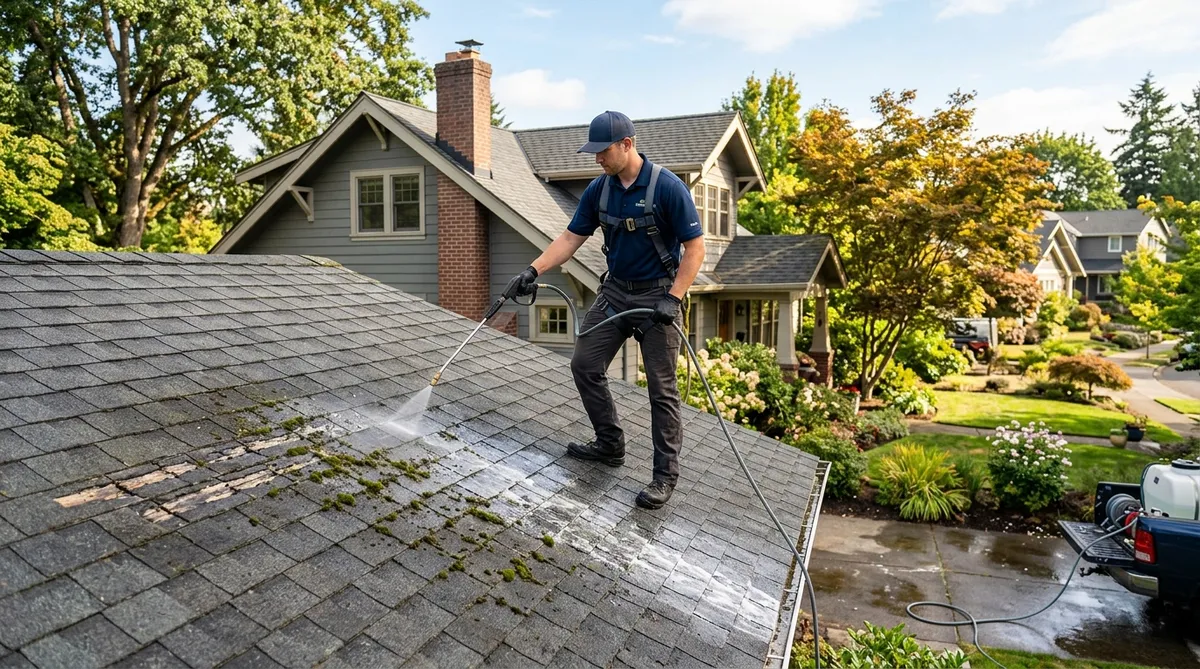
Picture this: You're up on a ladder, pressure washer in hand, aiming for that unsightly green streak on your roof. It looks satisfying as the water blasts away the buildup, but what you can't see is the damage happening beneath the surface. Pressure washers operate at 1,500 to 4,000 PSI (pounds per square inch), which is powerful enough to strip paint from siding or etch concrete. On a roof, that's overkill.
The primary issue is the force dislodging shingles or damaging their protective layers. Asphalt shingles, the most common type, are designed to withstand weather but not a direct hit from high-pressure water. The water can force its way under the shingles, lifting them and creating gaps where water can seep into your home. We've repaired countless roofs where pressure washing led to leaks during the next rainstorm.
Beyond immediate structural harm, pressure washing accelerates wear and tear. It can blow off granules—the small, rock-like particles that shield your shingles from UV rays and impacts. Without these granules, your roof loses its fire resistance, reflectivity, and longevity. A roof that's meant to last 20-30 years might need replacing in half that time. And don't get us started on the safety risks: slippery surfaces, falls from heights, and even electrical hazards if you're near wiring.
In short, what seems like a shortcut often turns into a headache. If you're dealing with moss or algae, there's a smarter way that protects your investment without the drama.
How Shingle Damage from Pressure Washing Snowballs into Bigger Problems
Let's dive deeper into why shingles are so vulnerable. Most residential roofs use composite asphalt shingles, made from a fiberglass mat coated in asphalt and topped with those protective granules. They're flexible and durable against rain, wind, and sun, but brittle under sudden, intense pressure.
When you pressure wash, the jet can crack the shingle's surface or push it out of alignment. Even if it doesn't look broken right away, the integrity is compromised. Water infiltration is the real culprit here—it can rot the underlying wood decking, leading to sagging or structural failure. In humid climates where moss thrives, this damage invites more moisture issues, creating a vicious cycle.
We've seen cases where homeowners pressure washed to remove algae, only to find black streaks from damaged shingles a year later. Those streaks? They're asphalt bleeding out as the protective coating erodes. Repairing a few loose shingles might cost a few hundred bucks, but if the damage spreads, you're looking at a full roof replacement—thousands of dollars down the drain. And insurance? Many policies won't cover damage from improper maintenance like pressure washing.
Algae and moss aren't just aesthetic nuisorders; they trap moisture and can lift shingles over time. But blasting them away isn't the answer. Understanding your roof's materials is key—tile or metal roofs might tolerate low-pressure rinses better, but for standard shingles, it's a no-go. Always check your manufacturer's guidelines; most explicitly warn against high-pressure cleaning.
What is Soft Washing? The Gentle Alternative to Pressure Washing
Enter soft washing: the pro's choice for roof cleaning that's effective without the destruction. Unlike pressure washing's brute force, soft washing uses low-pressure water (around 100-300 PSI) combined with specialized cleaning solutions to do the heavy lifting.
The process starts with a biodegradable, eco-friendly detergent tailored for roofs. These solutions, often containing sodium hypochlorite (a diluted bleach), potassium hydroxide, or surfactants, target organic growth like moss, algae, lichen, and mildew at the root. The mixture is applied from the ground or low on the roof using a garden hose attachment or pump sprayer, allowing it to dwell for 15-20 minutes. This kills the spores without needing to scrub or blast.
Then, the low-pressure rinse flushes away the dead growth. It's like giving your roof a gentle shower after a targeted treatment. Soft washing preserves the shingles' granules and structure while addressing the problem at its source—preventing regrowth for years.
Why does it work so well? Moss and algae embed themselves in shingles, and high pressure just scatters the spores, potentially spreading the issue to other areas. Soft washing's chemicals penetrate and eradicate, and the low pressure ensures no collateral damage. Pros use calibrated equipment to control the flow, often starting from the bottom up to avoid streaking.
From our experience, soft washing extends roof life by 5-10 years compared to neglect or harsh methods. It's also safer for you—no climbing or heavy machinery—and kinder to the environment, with solutions that break down naturally.
Tackling Moss and Algae the Safe Way: Step-by-Step Guidance
Ready to clean your roof without the risks? Whether you're going DIY or calling in the experts, here's how to approach moss and algae removal safely.
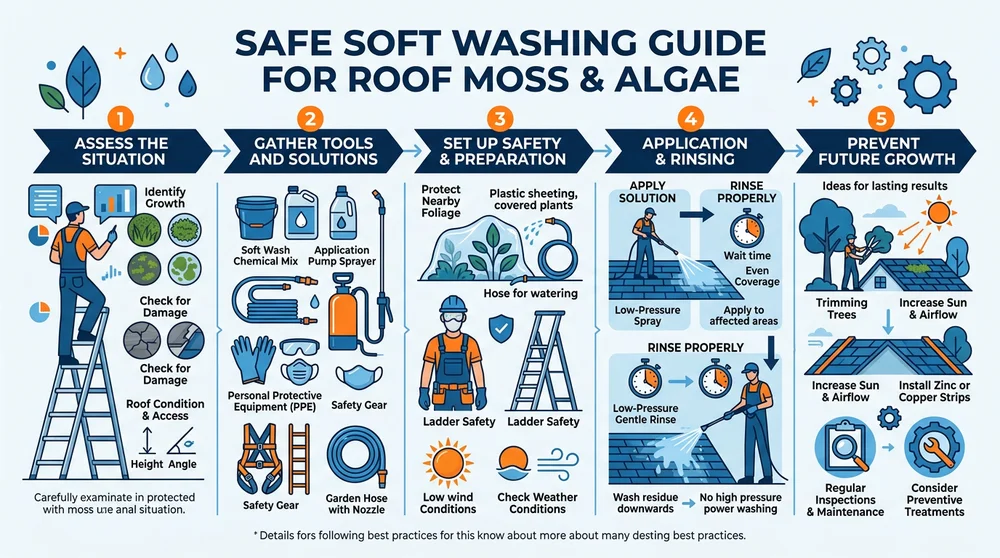
Assess the Situation First
Before any cleaning, inspect your roof. Look for black streaks (algae), green patches (moss), or fuzzy growth (lichen). Note the extent—spot treatment for small areas or full cleaning for widespread issues. Check your roof's age and condition; older roofs might need gentler handling. If you're not comfortable on the roof, use binoculars from the ground or hire an inspection.
Gather the Right Tools and Solutions
For DIY soft washing, you'll need:
- A soft wash system or low-pressure sprayer (rentable from home improvement stores).
- Roof-safe cleaner: Look for products like Wet & Forget or those labeled for soft washing. Avoid harsh chemicals that could void warranties.
- Protective gear: Gloves, goggles, and old clothes.
- Garden hose with adjustable nozzle set to low pressure.
Mix the solution per instructions—typically 1:10 bleach to water ratio, plus a bit of dish soap for adhesion. Test on a small, inconspicuous area first.
Apply and Rinse Properly
Work on a dry, overcast day to prevent quick evaporation. Start at the bottom ridge and work up, applying the solution evenly. Let it sit as directed—don't rush. After dwelling, rinse from top to bottom with low-pressure water. This downward flow prevents dirty runoff from streaking clean areas.
For moss-heavy roofs, you might need to gently remove loose chunks with a soft brush before treatment, but never scrape hard. Repeat treatments annually in damp climates to keep growth at bay.
Prevent Future Growth
Prevention is your best defense. Trim overhanging branches to increase sunlight and airflow—moss loves shade and moisture. Keep gutters clean to avoid standing water. Consider zinc or copper strips installed along the roof ridge; as rain flows over them, it releases ions that inhibit algae growth naturally.
In coastal or forested areas, annual soft washes are a smart maintenance ritual. It's far cheaper than repairs and keeps your home looking sharp.
When to Call in Professional Roof Cleaners
While DIY soft washing is doable for minor issues, pros bring expertise that saves time and ensures thorough results. We've cleaned hundreds of roofs and know how to handle steep pitches, multi-story homes, or delicate materials like slate or cedar shakes.
Hiring a licensed contractor via platforms like ContractorLink.pro means access to commercial-grade solutions and warranties on the work. Expect to pay $300-$800 for a standard roof, depending on size and condition—a small price for peace of mind. Look for certifications from the NRCA (National Roofing Contractors Association) and ask about their soft washing methods.
Signs you should call a pro: Extensive growth, roof age over 15 years, or if you're dealing with warranties. Attempting pressure washing yourself? Stop now and consult an expert to assess any prior damage.
Final Thoughts on Protecting Your Roof Investment
Your roof is more than shelter—it's a major part of your home's value and comfort. Skipping the pressure washer in favor of soft washing keeps it intact while effectively banishing moss and algae. By understanding the risks and adopting gentler techniques, you can avoid expensive fixes and enjoy a cleaner, longer-lasting roof.
As contractors, we've fixed too many pressure-washed mishaps to count. Take our advice: Treat your roof with care, and it'll protect you for years to come. Stay safe up there!