Whole-House Surge Protectors: Overkill or Essential Home Protection?
Hey there, homeowners! If you've ever watched your TV flicker and die during a storm, or found your fridge humming oddly after a power blip, you know the frustration of electrical surges. As pros at ContractorLink.pro, we've wired up countless homes and seen the aftermath of surge damage firsthand. Today, we're diving into whole-house surge protectors—those panel-level devices that promise to shield your entire electrical system. Are they overkill for the average setup, or an essential upgrade in our lightning-prone, grid-stressed world? Let's unpack the facts, from what causes surges to the hefty price tag of ignoring them, and whether this tech is worth the install.
Understanding Surge Events: The Hidden Threats in Your Power Lines
Surges aren't just dramatic lightning strikes from a movie—they're everyday electrical hiccups that can fry your gear. A power surge happens when excess voltage spikes through your home's wiring, overwhelming the circuits designed for steady 120-volt flow. These spikes can last milliseconds but pack enough punch to damage sensitive components in everything from your smartphone charger to your HVAC system.
The culprits? Start with lightning, the big bad wolf of surges. A single strike nearby can send thousands of volts racing through power lines, even if it doesn't hit your house directly. We've had clients call in panic after a storm, only to find their home theater setup reduced to a smoking ruin. But lightning is just one player. Utility grid issues cause about 65% of surges, according to electrical experts. Think brownouts from heavy demand, accidents like fallen trees on lines, or even your neighbor's AC unit kicking on and causing a temporary overload.
Then there are internal surges, the sneaky ones from within your home. Large appliances like refrigerators, washers, or even that new electric vehicle charger cycling on can create mini-spikes. If your wiring is older—say, pre-1980s aluminum stuff—these add up fast. Fun fact: The average home experiences up to 100 surges a year, per the National Fire Protection Association. Most are minor, but one big one can cascade into widespread damage. As contractors, we always advise checking your panel for signs of wear; frayed wires or buzzing breakers are red flags that your system might be primed for trouble.
The Real Cost of Surge Damage: Why Electronics and Appliances Aren't Cheap to Replace
Let's talk dollars and sense—because nothing hits home like a repair bill. When a surge zaps your electronics, it's not just the device that suffers; it's the domino effect on your wallet and peace of mind. Modern homes are loaded with surge-sensitive tech: smart TVs averaging $500-$1,500, laptops at $800+, and gaming consoles pushing $400. A single surge can wipe out multiple items at once.
Take appliances: Your central air conditioner might cost $3,000-$7,000 to replace, not including labor. We've seen surges burn out compressor motors, leading to totals that exceed $5,000 when you factor in refrigerant recharge and ductwork tweaks. Refrigerators? A new one runs $1,000-$2,500, but if the surge hits the control board, you're looking at $300-$600 in repairs alone—assuming it's salvageable. And don't get us started on whole-home systems like furnaces or water heaters; surge damage there can balloon to $4,000+.
Beyond the sticker shock, there's downtime and hassle. Imagine a summer blackout frying your AC—sudden repair waits mean sweltering nights and spoiled food from a dead fridge. Insurance might cover some, but deductibles often eat into that, and not all policies include surge-specific riders. One study from Consumer Reports estimates average household surge damage at $5,000 over a decade without protection. Multiply that by the irreplaceable sentimental stuff—like family photos on a corrupted hard drive—and it's clear: surges aren't just inconvenient; they're expensive disasters waiting to happen.
Homeowners often underestimate cascading effects too. A surge might start with your microwave but travel to connected devices via power strips or shared circuits. In older homes, this can stress the main panel, leading to bigger electrical overhauls down the line. As experienced electricians, we've quoted jobs where a $200 surge protector could've saved thousands in rewiring. The bottom line? Protecting your investment isn't optional if you want to avoid those gut-wrenching "what if" moments.
What Panel-Level Protection Actually Does: The Mechanics of Whole-House Surge Protectors
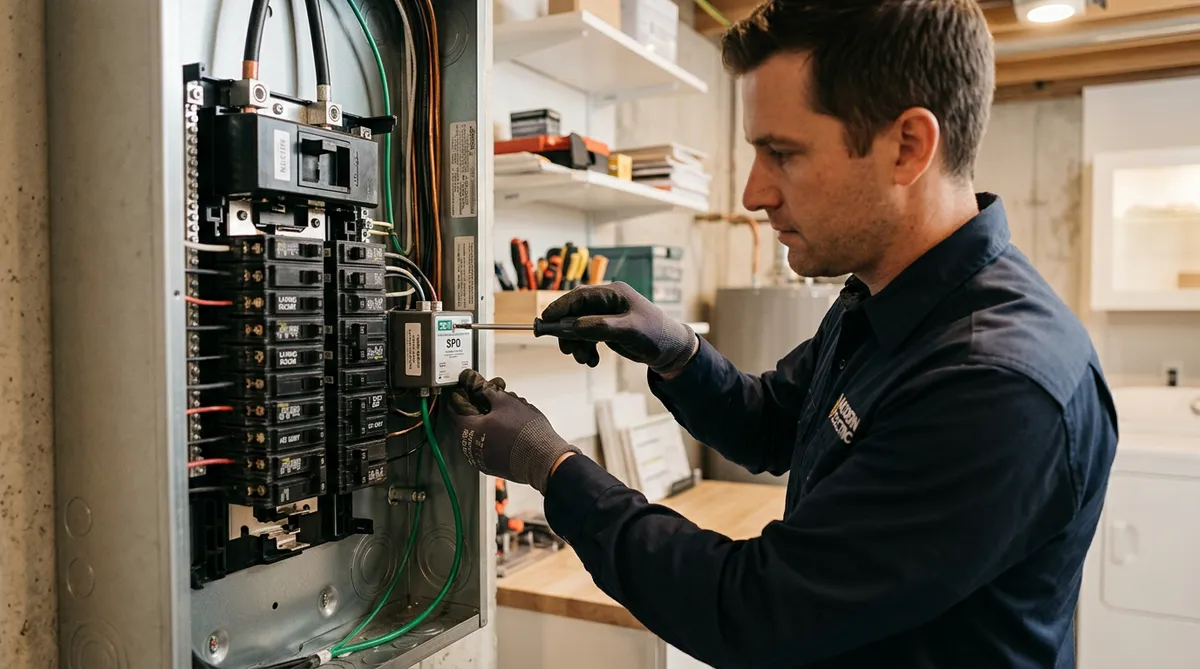
So, what exactly is a whole-house surge protector, and does it live up to the hype? Unlike plug-in strips that guard one outlet, these beasts install at your electrical panel (aka breaker box), acting as the first line of defense for your entire home. They're also called Type 1 or Type 2 surge protective devices (SPDs), rated by standards from Underwriters Laboratories (UL).
Here's how they work: The protector monitors incoming voltage and uses components like metal oxide varistors (MOVs) to divert excess energy to ground when spikes exceed safe levels—typically clamping at 400-600 volts. This happens in nanoseconds, shunting the surge away before it floods your circuits. Top models handle up to 100,000 amps of surge current, enough for most residential threats.
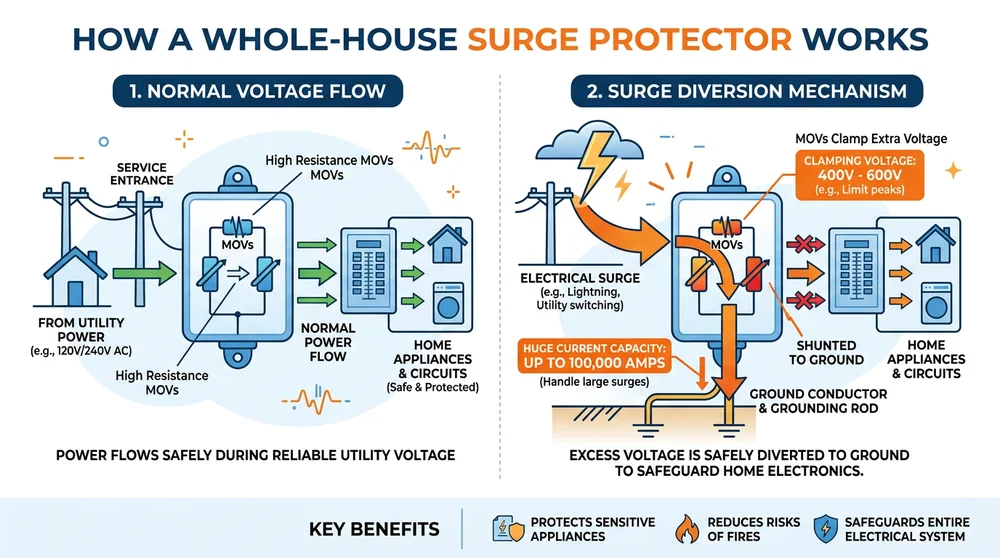
What does it stop? Primarily internal and utility-induced surges. It nabs those grid fluctuations from switching transformers or appliance startups, preventing them from rippling through your home. For lightning? It's helpful but not foolproof. A direct hit (rare, but devastating) might overwhelm even the beefiest unit, though it buys time by absorbing the initial jolt. We've installed these in lightning alleys like Florida and seen them save systems during indirect strikes that would've totaled unprotected setups.
Key specs to know: Look for a joule rating (energy absorption capacity, ideally 50,000+ joules) and let-through voltage (lower is better, under 400V). Brands like Siemens, Eaton, or Intermatic offer reliable options with indicators showing when replacement is needed—those MOVs wear out after big hits. Installation is straightforward for pros: It wires in parallel at the panel, no major downtime. Cost? $300-$800 for the device, plus $200-$500 labor, depending on your setup. In new builds or panel upgrades, it's often bundled in.
But a caveat: Panel protectors don't cover everything. They won't stop surges from phone lines, cable coax, or Ethernet—those need point-of-use protectors. And in homes with subpanels (like detached garages), you might need multiples. As contractors, we always pair them with whole-home grounding checks; poor grounds reduce effectiveness by 50%. Done right, though, they reduce surge damage risk by up to 90%, per electrical engineering data.
Weighing the Pros and Cons: Is Whole-House Protection Overkill for Your Home?
Now, the million-volt question: Essential or overkill? Let's break it down.
Pros: Peace of mind tops the list. In surge-heavy areas (think rural spots with overhead lines or storm-prone regions), it's a no-brainer. It protects high-value items you can't easily unplug, like built-in appliances or security systems. Long-term savings shine too—avoiding one major repair pays for the install tenfold. Energy efficiency bonus: By stabilizing voltage, they can extend appliance life, cutting replacement cycles.
Cons: Upfront cost stings if your home is low-risk—urban apartments with stable grids might get by with plug-ins. Not all surges are caught, especially massive external ones, so it's not invincible. Maintenance matters; ignoring a failed indicator means false security. For renters or flippers, the ROI might not justify it.
When is it essential? If your home has sensitive electronics (home offices, smart homes), valuable appliances, or a history of outages, go for it. We've recommended them for families with medical devices—surges there aren't just costly; they're dangerous. In contrast, a bare-bones setup with few gadgets? Maybe stick to basics.
Our pro tip: Assess your risk. Check local weather patterns, review past power issues, and inspect your panel's age. If it's over 20 years old, upgrading with surge protection makes sense alongside a full service.
Making the Decision: Protecting Your Home the Smart Way
Whole-house surge protectors aren't a cure-all, but in our experience, they're far from overkill for most modern homes. With surges lurking in everyday power and the steep costs of inaction, investing in panel-level defense is like insurance for your electrical backbone—proactive and worthwhile. We've helped hundreds of homeowners sleep better knowing their setups are fortified.
If you're pondering an install, chat with a licensed electrician via ContractorLink.pro. They'll tailor advice to your wiring and needs, ensuring top-notch protection without the guesswork. Stay safe, stay powered, and here's to surge-free living!
(Word count: approximately 1,250)