How Long Does a Deck Really Last? Material Choices, Water Damage, and Why the Structure Underneath Matters Most
Introduction: The Truth About Deck Longevity
As a contractor who's built and repaired hundreds of decks, I've seen it all—from pristine patios that look brand new after a decade to sagging structures that barely make it five years. Homeowners often ask, "How long will my deck last?" The short answer? It depends. On average, a well-maintained wooden deck might last 10 to 25 years, while composite or PVC options can push 25 to 50 years. But here's the kicker: poor choices and neglect can slash that lifespan in half. In this post, we'll dive into material selections, the silent killer of water damage, and why the deck's underbelly—the structure—often matters more than the pretty surface you walk on. Armed with these insights, you can make smarter decisions and keep your deck thriving for seasons to come.
Material Choices: Building Blocks of Durability
Your deck's material is like its DNA—it sets the foundation for how long it'll endure the elements. Let's break down the big players and what they mean for longevity.
Pressure-Treated Wood: Affordable but High-Maintenance
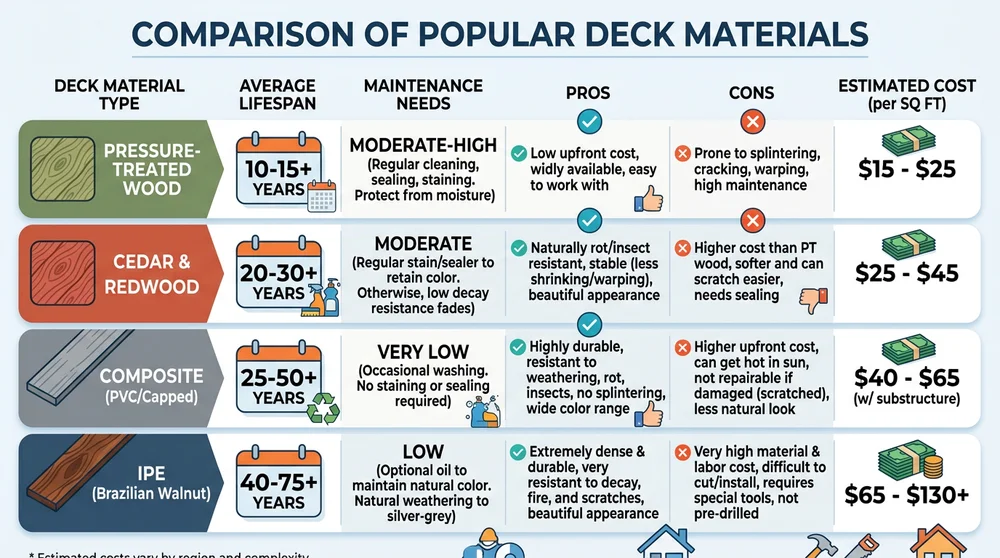
Pressure-treated lumber is the go-to for budget-conscious homeowners. It's infused with chemicals to resist rot and insects, making it a solid choice for many climates. Expect a lifespan of 10 to 20 years with proper care. The wood is kiln-dried and treated to handle moisture, but it's not invincible.
Pro tip: Opt for Southern yellow pine or cedar for better natural resistance. Avoid mixing green (untreated) wood with treated—it warps faster. Seal it annually with a water-repellent finish containing UV inhibitors to block sun damage. I've seen decks last 25 years when owners stay on top of this, but neglect it, and you'll be replacing boards by year 8.
Cedar and Redwood: Natural Beauty with a Price
If you want that warm, rustic look without the upkeep nightmare, cedar or redwood shines. These woods contain natural oils that repel water and bugs, potentially lasting 15 to 30 years. They're softer than treated pine, so they're prone to dents from furniture or foot traffic, but their aesthetics are unmatched.
Practical advice: Source heartwood (the inner, denser part) for maximum durability—it's pricier but worth it. Apply a penetrating oil finish every 1-2 years to maintain those oils. In humid areas, elevate the deck slightly for airflow; I've repaired too many cedar decks where poor drainage turned beauty into mush in under a decade.
Composite and PVC Decking: Low-Maintenance Longevity
For hands-off owners, composite (wood-plastic blend) or PVC (all-plastic) decks are game-changers. They resist fading, staining, and warping, boasting 25-50 year warranties. No splinters, no sealing—just occasional soap-and-water cleaning.
But not all composites are equal. Cheaper ones use recycled plastics that can expand in heat, leading to gaps or cupping after 10 years. Go for capped composites with a protective polymer shell for better fade resistance.
Contractor insight: Install with hidden fasteners to prevent moisture wicking between boards. In my experience, these materials cut replacement costs by 50% over wood, but upfront investment is higher—think $30-50 per square foot versus $15-25 for wood.
Exotic Woods like Ipe: Premium Endurance
Ipe, a Brazilian hardwood, is the Ferrari of decking—dense, termite-proof, and able to last 40-75 years. It weathers to a silver-gray patina but holds up against fire and extreme weather.
Tip for success: Use stainless steel hardware to avoid corrosion reactions. Oil it sparingly to preserve the rich color. While expensive ($8-12 per linear foot), it's a one-and-done for coastal or high-traffic homes. I've installed Ipe decks that outlast the houses they're attached to.
Choosing the right material isn't just about looks—it's about matching it to your climate, budget, and maintenance style. Factor in local weather: salty air accelerates corrosion, so prioritize rot-resistant options near the ocean.
Water Damage: The Sneaky Saboteur That Halves Lifespans
Water is a deck's worst enemy, infiltrating seams, pooling on surfaces, and rotting from within. Even the toughest materials succumb if water wins. A single unchecked leak can turn a 20-year deck into a 10-year headache.
How Water Wreaks Havoc
Moisture causes expansion and contraction, leading to cracks and loose boards. In freeze-thaw cycles, water in pores expands as ice, splintering wood. Composites fare better but can delaminate if substructure gets soggy.
Common culprits? Poor flashing around the house connection—water seeps behind siding into joists. Clogged gutters direct roof runoff onto the deck, and standing water from uneven surfaces breeds mold and decay.
Prevention Strategies from the Pros
Start with design: Slope the deck surface 1/8 inch per foot away from the house for drainage. Install a membrane under the ledger board (where deck meets house) with metal flashing to divert water.
Sealant matters—use products rated for your material. For wood, reapply every 1-2 years; test by sprinkling water—if it beads, you're good; if it soaks in, reseal. Composites need less, but clean debris to avoid trapping moisture.
Pro hack: Add a gutter system along the house edge if your roof overhangs the deck. I've saved countless decks by retrofitting these—simple aluminum channels cost under $100 and prevent billions in damage (okay, not billions, but you get it). Inspect annually for soft spots; a screwdriver poke reveals rot early.
In rainy regions, consider covered sections or awnings to cut direct exposure by 50%. Neglect water issues, and you're looking at costly repairs: replacing a rotted joist runs $500-1,000 each.
The Structure Underneath: Why It's the Real MVP
Flashy decking grabs attention, but the frame—posts, beams, joists, and footings—is the unsung hero. A weak structure dooms even premium surfaces, cutting lifespan by half or more.
Key Components and Their Roles
Posts and footings anchor everything. Concrete footings below frost line prevent heaving; shallow ones shift in winter, stressing the whole build. Use 4x4 or 6x6 pressure-treated posts rated for ground contact.
Joists (the horizontal supports) bear the load. Space them 16 inches on center for stability, and use galvanized hangers to secure them—no toe-nailing, which loosens over time.
Beams span posts; doubled-up treated lumber with proper bolting handles weight. Hidden issues like undersized beams cause sagging, leading to cracks and safety hazards.
Common Structural Pitfalls and Fixes
Over time, soil erosion undermines footings—check for tilting posts. Insect damage chews through untreated wood; treat with borates during construction.
In my repairs, 70% of failures trace to the structure: corroded hardware in humid areas or overloaded designs from adding hot tubs without reinforcement. Solution? Overbuild slightly—use 2x10 joists instead of 2x8 for spans over 10 feet.
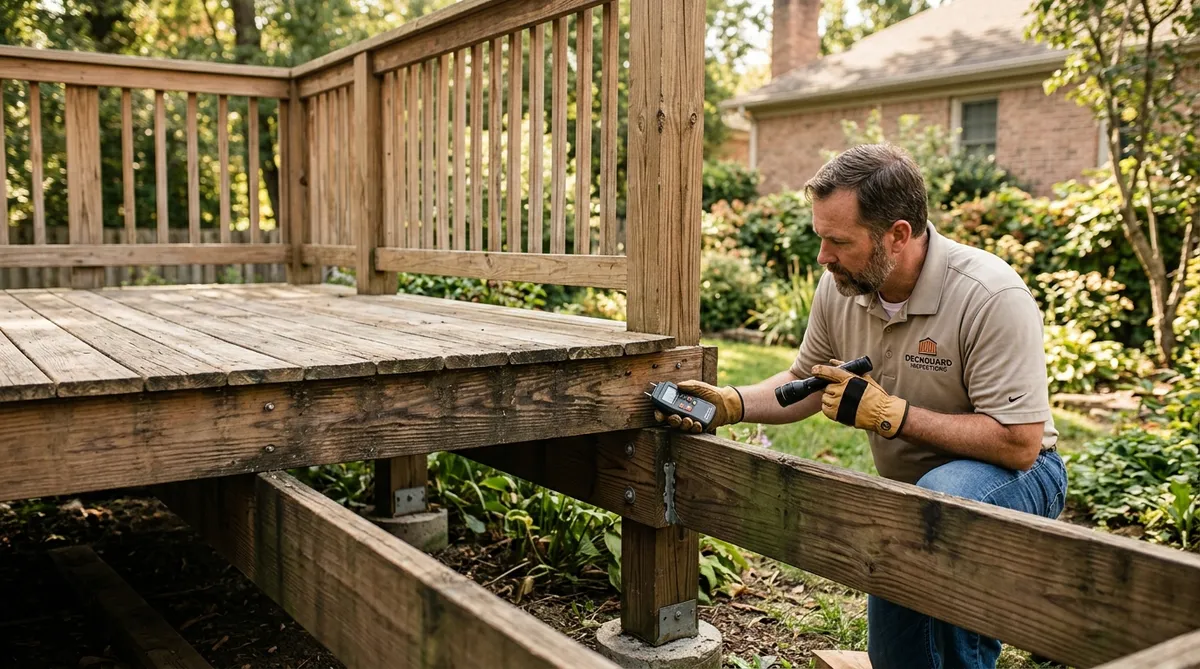
Maintenance must: Inspect underneath yearly. Look for rust, cracks in concrete, or green algae signaling moisture. Tighten bolts and replace any spongy wood immediately. For elevated decks, ensure proper ventilation to dry out after rain—blocked airflow doubles rot risk.
Pro tip: If building new, hire a structural engineer for custom designs, especially on slopes. Retrofitting a solid frame extends life by 10-15 years, often cheaper than full replacement.
Maintenance Routines to Maximize Your Deck's Life
No deck lasts without TLC. Here's a seasonal checklist:
Spring: Clean thoroughly—pressure wash at low PSI (under 1500) to avoid gouging. Inspect and reseal.
Summer: Trim overhanging branches to reduce shade and debris. Spot-treat stains promptly.
Fall: Clear leaves to prevent mold. Check for loose railings.
Winter: Shovel snow lightly; avoid salt, which corrodes. Cover if possible.
Budget $200-500 yearly for upkeep—it's an investment that pays off. Track issues in a log for patterns.
Wrapping It Up: Build Smart, Last Long
A deck's true lifespan hinges on smart material picks, vigilant water management, and a rock-solid structure. Skip these, and you're halving your ROI; nail them, and enjoy decades of barbecues and sunsets. As pros at ContractorLink.pro, we've seen the difference firsthand—invest wisely, maintain diligently, and your deck could become a family heirloom. Got questions on your setup? A licensed contractor can assess and advise tailored to your home.
(Word count: approximately 1250)