
Why Fall Lawn Care Trumps Spring: Aeration, Overseeding, and Fertilization for a Lush Yard Next Year
The Unsung Hero of Lawn Maintenance: Fall Over Spring
As homeowners, we're conditioned to think of spring as the big reset button for our lawns. We rush out to mow, fertilize, and maybe even reseed after a long winter. But here's a pro tip from the contractors at ContractorLink.pro: fall is where the real magic happens for your yard. With cooler temperatures, consistent moisture, and less weed competition, autumn sets the stage for a lawn that's not just surviving but thriving come next year.
Why does fall win? In spring, your grass is competing with emerging weeds, and the soil is often compacted from foot traffic and winter thaw. Summer heat can stress new growth, leading to patchy results. Fall, on the other hand, gives roots time to establish before dormancy, leading to denser turf and fewer problems down the line. In this post, we'll dive into the key services—aeration, overseeding, and fertilization—and the optimal timing to make them count. Whether you're a DIY enthusiast or ready to call in the pros, these insights will help you achieve that envy-of-the-neighborhood lawn.
Understanding the Fall Advantage for Your Lawn
Fall lawn care isn't about quick fixes; it's about investing in the future health of your turf. Cool-season grasses like Kentucky bluegrass, fescue, and ryegrass—which dominate in many regions—naturally focus on root development in autumn. Warm-season varieties, such as Bermuda or Zoysia, also benefit from fall prep to recover from summer stress.
One major perk is reduced disease risk. High summer humidity breeds fungi, but fall's drier air and cooler nights minimize issues like brown patch or dollar spot. Plus, with kids back in school and vacations over, you have more time to tackle maintenance without the rush.
From our experience connecting homeowners with licensed landscapers, we've seen fall-treated lawns emerge 20-30% thicker in spring. It's not hype—it's science backed by soil biology. Weeds slow their growth in fall, so your efforts aren't undermined. And rainfall is often more reliable than erratic spring showers, ensuring even hydration for new seeds and roots.
If your lawn looks tired after a hot summer—thinner spots, bare patches, or yellowing—fall is your chance to turn it around. Let's break down the essentials.
Aeration: Loosening Soil for Deeper Roots
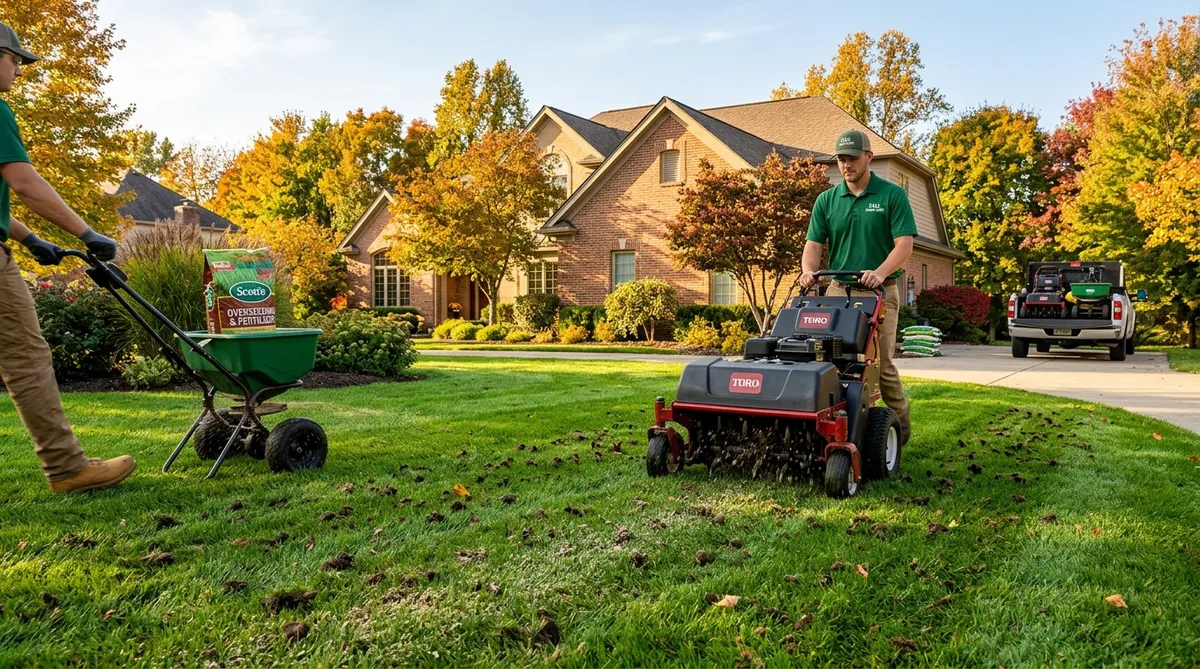
Aeration is like giving your lawn a deep breath. It involves punching holes in the soil to relieve compaction, improve air and water flow, and encourage root growth. Compacted soil, caused by heavy foot traffic, machinery, or clay-heavy dirt, starves roots of oxygen and nutrients. Without aeration, even the best fertilizer won't penetrate effectively.
Why Fall for Aeration? Spring aeration can disrupt emerging growth and invite weeds into the fresh holes. In fall, typically late August to mid-October (depending on your zone), the grass is still actively growing but shifting energy to roots. This timing allows recovery before winter, so come spring, your lawn wakes up vigorous.
For cool-season grasses, aim for early fall when soil temps are above 50°F but air is cooling. Warm-season lawns? Aerate in early fall after the heat breaks, around September. Check your USDA hardiness zone for precision—zone 5 might start in September, while zone 8 could go into October.
How to Aerate Effectively:
- DIY Option: Rent a core aerator from a home improvement store (about $50-100/day). Mow your lawn short first (1.5-2 inches), then run the machine in overlapping passes. Water the lawn a day before to soften soil, but avoid soggy conditions.
- Pro Tip: Leave the extracted soil plugs on the surface—they'll break down and enrich the thatch layer naturally.
- Hire a Pro: If your yard is over 5,000 sq ft or sloped, call a landscaper. They use powered machines for even results and can assess soil pH while they're at it.
Expect to aerate every 1-2 years. Post-aeration, your lawn will look a bit rough, but that's temporary. Follow up with overseeding and fertilizing for maximum impact. Homeowners who've skipped fall aeration often report weaker spring growth—don't make that mistake.
Overseeding: Filling in the Gaps for Density
Overseeding is the process of spreading new grass seed over your existing lawn to thicken it up and introduce disease-resistant varieties. It's especially crucial if you've got bare spots from summer drought, pet wear, or pests. Fall's moderate temps (daytime 60-75°F) are ideal for germination, with nights cool enough to prevent heat stress.
Timing is Everything: For cool-season grasses, overseed from mid-August to early October. This gives seeds 6-8 weeks to establish before frost. Warm-season types? Late spring to early summer is better, but if you're in a transition zone, a fall light overseed can help winter hardiness.
Choose seed matched to your grass type—perennial ryegrass for quick cover, fine fescue for shade tolerance. Avoid mixing warm and cool varieties unless advised by a pro.
Step-by-Step Overseeding Guide:
- Prep the Lawn: Mow low and dethatch if needed (remove thatch buildup over ½ inch). Aerate first—those holes are perfect seed beds.
- Seed Selection and Rate: Use 5-10 lbs of seed per 1,000 sq ft for overseeding. High-quality, certified seed ensures better germination (80-90% rate).
- Spreading: Use a broadcast spreader for even coverage. Lightly rake seeds into the soil or aerator holes.
- Water and Protect: Keep soil moist (not waterlogged) with light daily watering for 2-3 weeks. Avoid heavy traffic until seedlings are 2 inches tall.
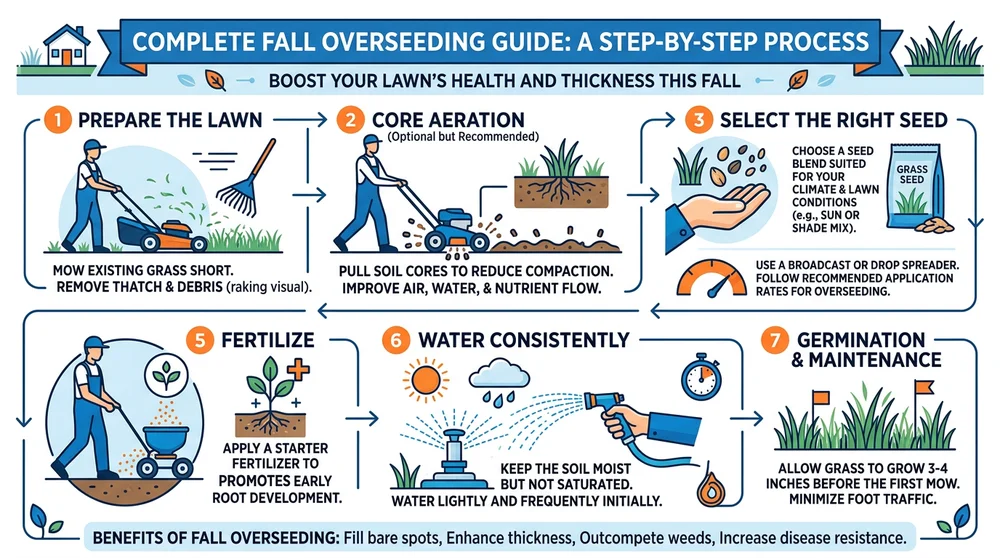
Pro contractors recommend starter fertilizer with overseeding to boost phosphorus for root development. In our network, we've seen overseeded fall lawns cut weed invasion by half next year because a dense turf crowds them out. If DIY feels overwhelming, a local service can handle it for $0.10-0.20 per sq ft—worth it for lasting results.
Fertilization: Nourishing Roots Before Dormancy
Fertilization in fall is about feeding the roots, not pushing top growth. Nitrogen-heavy spring feeds promote leafy blades, but autumn applications focus on balanced nutrients—especially potassium for winter hardiness and phosphorus for roots.
Optimal Fall Schedule: Apply in two rounds for best results. First application: early fall (late August/September), a slow-release fertilizer with 20-5-10 NPK ratio. Second: 4-6 weeks later (October/November), higher in potassium (like 10-10-20) to strengthen against cold.
Soil test first—kits are cheap ($10-20) or pros can do it. Most lawns need 1 lb of nitrogen per 1,000 sq ft annually, split across seasons. Avoid over-fertilizing; it leads to lush growth that's vulnerable to frost.
Practical Application Tips:
- Choose the Right Product: Opt for granular slow-release over quick greens— it feeds steadily through winter.
- Weather Watch: Apply before a rain to activate, but not in heavy downpours that cause runoff.
- Even Coverage: Use a drop or broadcast spreader. Water lightly after to settle it in.
From contractor insights, fall fertilization alone can improve spring green-up by 40%. It builds reserves so your lawn doesn't yellow early next year. If you're organic-minded, try compost or corn gluten meal as natural alternatives.
Winter Prep and Long-Term Lawn Health
After aeration, overseeding, and fertilizing, give your lawn a final mow at 2-2.5 inches to shade roots from winter sun. Rake leaves promptly to prevent smothering, or mulch them finely for natural fertilizer.
Monitor for pests like grubs—fall treatments with beneficial nematodes can nip issues in the bud. And remember, healthy soil pH (6.0-7.0) amplifies everything; lime if needed based on tests.
By prioritizing fall care, you're not just maintaining—you're future-proofing. Homeowners who invest here spend less on spring repairs and enjoy a yard that handles drought and traffic better. It's the contractor's secret to low-maintenance beauty.
In wrapping up, skip the spring-only routine and embrace fall as your lawn's best friend. With these timed services, you'll see roots deepen, density increase, and vibrancy return stronger. Your yard will thank you come next blooming season.