
What Every Well Owner Should Know About Water Testing: Annual Checks, Key Contaminants, and When to Add a Softener or Filter
Why Annual Water Testing is a Must for Well Owners
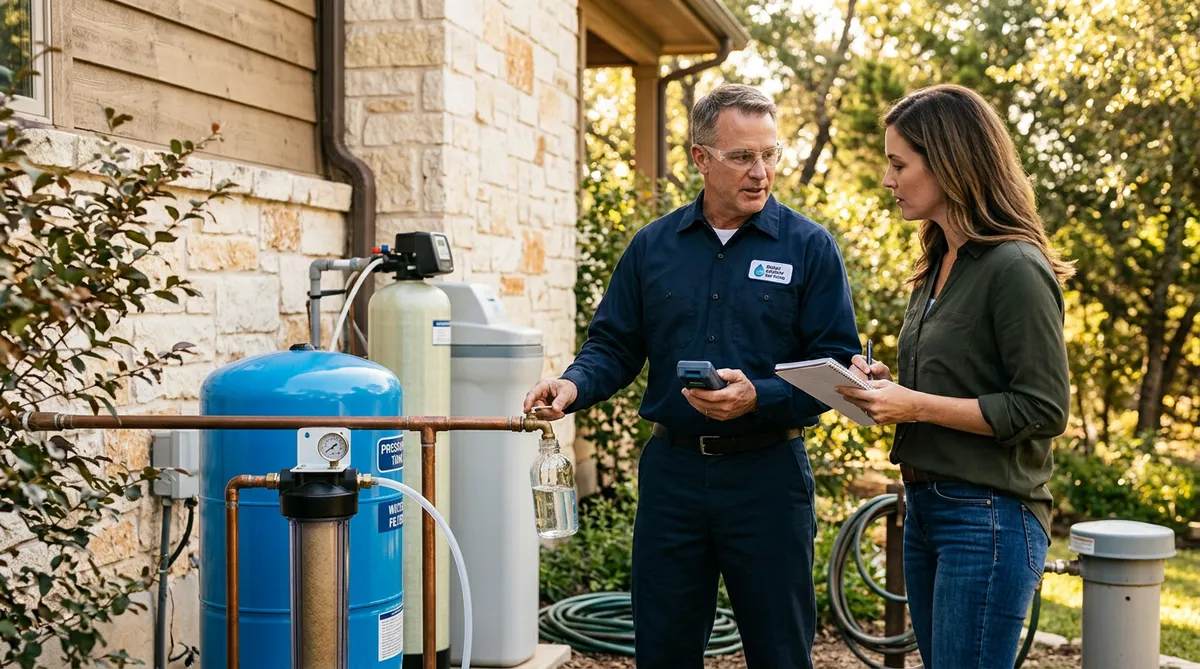
As a contractor who's installed and maintained countless well systems over the years, I've seen firsthand how well water can be a double-edged sword. On one hand, it's independent and often pure; on the other, it's unregulated by municipal standards, putting the onus on you to ensure it's safe. Unlike city water, which gets routine checks from utilities, your private well demands proactive vigilance. That's where annual water testing comes in—it's your first line of defense against hidden hazards that could affect health, appliances, and even your home's plumbing.
Testing once a year isn't just a recommendation; it's a smart, cost-effective habit. Wells can be influenced by everything from seasonal rains to nearby agricultural runoff or even aging casings that let contaminants seep in. A single test can cost between $100 and $300, depending on the scope, but catching issues early saves thousands in repairs or health costs down the line. Pro tip: Schedule your test in the spring after winter thaws or heavy rains, when contaminants are most likely to mobilize. Use a certified lab—your local health department can point you to accredited ones—or hire a plumber familiar with well systems to collect the sample properly. They'll ensure it's done right, avoiding contamination during handling that could skew results.
Common Contaminants to Watch For in Well Water
Well water isn't one-size-fits-all; its quality varies by location, geology, and land use around your property. As pros, we always advise testing for a broad panel of potential threats. Here's a rundown of the big ones every well owner should prioritize:
Bacteria and Pathogens
Coliform bacteria, including E. coli, are top concerns because they signal possible fecal contamination from septic systems, livestock, or wildlife. Even if they don't make you sick directly, they indicate other pathogens like viruses or parasites might be lurking. Symptoms from bacterial issues can range from stomach upset to serious infections, especially in kids or the elderly.
Actionable Advice: Test for total coliform and E. coli annually. If positive, shock chlorinate your well immediately—mix household bleach with water and pump it through the system, then flush thoroughly. Retest after 48 hours. For ongoing protection, consider UV disinfection if bacteria recur.
Nitrates and Nitrites
These come from fertilizers, manure, or sewage and are particularly risky for infants, potentially causing 'blue baby syndrome' by interfering with oxygen in the blood. Levels above 10 mg/L for nitrates are a red flag per EPA guidelines.
Actionable Advice: Rural well owners near farms should test nitrates every year, or more often if you notice a sudden change in water taste or odor. If elevated, install a reverse osmosis (RO) system under your sink for drinking water—it's affordable and effective, filtering out nitrates down to safe levels.
Heavy Metals: Arsenic, Lead, and Iron
Arsenic is a silent killer in some regions, leaching from natural rock or pesticides; chronic exposure links to cancer and skin issues. Lead might enter from old pipes or corroding well components, affecting neurological development. Iron, while not toxic, stains fixtures and gives water a metallic taste.
Actionable Advice: Test for arsenic and lead every 3-5 years unless you suspect issues, but include iron annually if your water looks rusty. For arsenic, oxidation-filtration systems work well at the point of entry. Lead calls for pipe replacement if confirmed, but activated carbon filters can help in the interim. Iron is often best tackled with a water softener, which we'll cover next.
pH and Other Parameters
Low pH (acidic water) can corrode pipes, while high pH makes water scale-prone. Hardness, measured in grains per gallon (gpg), indicates mineral content that leads to buildup.
Actionable Advice: Include pH and hardness in your annual panel. If pH is below 6.5, a neutralizing filter with calcite can raise it. Hardness over 7 gpg? Time to think softener—more on that below.
When a Water Softener is Justified
Hard water is the bane of every plumber's existence—it's not a health hazard, but it wreaks havoc on your home. If your annual test shows hardness above 7 gpg (or you notice soap scum, dry skin, or spotted dishes), a softener isn't a luxury; it's justified maintenance.
Water softeners use ion exchange to swap calcium and magnesium (the culprits) for sodium or potassium. They're typically installed at your home's main water line, treating all incoming water. Expect to pay $500-$2,000 for a unit, plus installation around $300-$500. As contractors, we recommend salt-based systems for most homes, but if sodium is a concern (e.g., for low-sodium diets), go potassium or template-assisted crystallization (TAC) models that don't add minerals.
Signs It's Time: Beyond test results, watch for white scale on faucets, reduced water pressure from buildup, or appliances like water heaters failing prematurely. In areas with very hard water (10+ gpg), softeners extend the life of your plumbing by 30-50%. Maintenance is simple: Refill salt monthly and regenerate every few days. Just remember, softened water isn't ideal for drinking if you're watching sodium—use an RO unit for that.
When to Invest in a Filtration System
Filtration steps in when contaminants go beyond what a softener handles. If your tests reveal bacteria, nitrates, or heavy metals, a whole-house or point-of-use filter is often the fix. Don't wait for symptoms; proactive installation prevents bigger problems.
Point-of-Use vs. Whole-House Systems
For targeted issues like drinking water contaminants, point-of-use (POU) filters under sinks or on faucets are cost-effective ($100-$400). RO systems excel here, removing up to 99% of nitrates, lead, and arsenic while also improving taste.
Whole-house (POE) systems treat all water, ideal for bacteria or widespread metals. UV lights kill pathogens without chemicals ($500-$1,500 installed), while multi-stage filters combine sediment, carbon, and oxidation for comprehensive protection ($1,000-$3,000).
Justification Criteria: Install if tests show levels exceeding EPA limits—e.g., arsenic over 10 ppb or coliform present. Also consider if you have vulnerable household members or if unfiltered water is causing noticeable issues like odors or discoloration. In flood-prone areas, annual bacteria tests might justify UV year-round.
Pro Installation Tips: DIY kits exist, but we always advise pros for whole-house setups to ensure proper sizing and bypass valves. They'll also integrate it with your existing softener if needed. Regular filter changes (every 6-12 months) keep it effective—budget $50-$200 yearly.
Taking Action: Your Testing and Treatment Roadmap
Armed with this knowledge, here's your step-by-step plan:
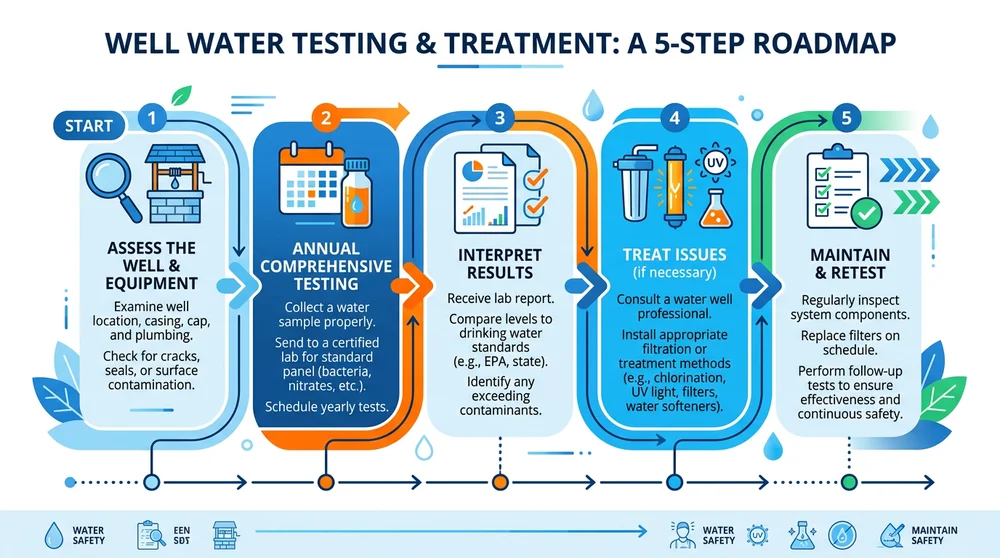
Assess Your Well: Note its age, depth, and surroundings. Older wells (20+ years) need more frequent checks.
Test Annually: Use a basic panel for bacteria, nitrates, pH, and hardness; expand for metals every few years. Kits from labs like those recommended by the EPA are straightforward—collect a first-draw sample after fasting the well overnight.
Interpret Results: If anything's off, consult a certified water specialist or plumber. Free resources from your state extension service can help.
Treat Accordingly: Start with the least invasive fix. For hardness, softener; for contaminants, filter. Combine them for optimal results.
Maintain and Retest: After installation, retest in 6 months to verify effectiveness, then annually.
In my experience, well owners who stay consistent rarely face major crises. Your water is your home's lifeline—treat it that way, and it'll serve you reliably for years.
(Word count: approximately 1250)