
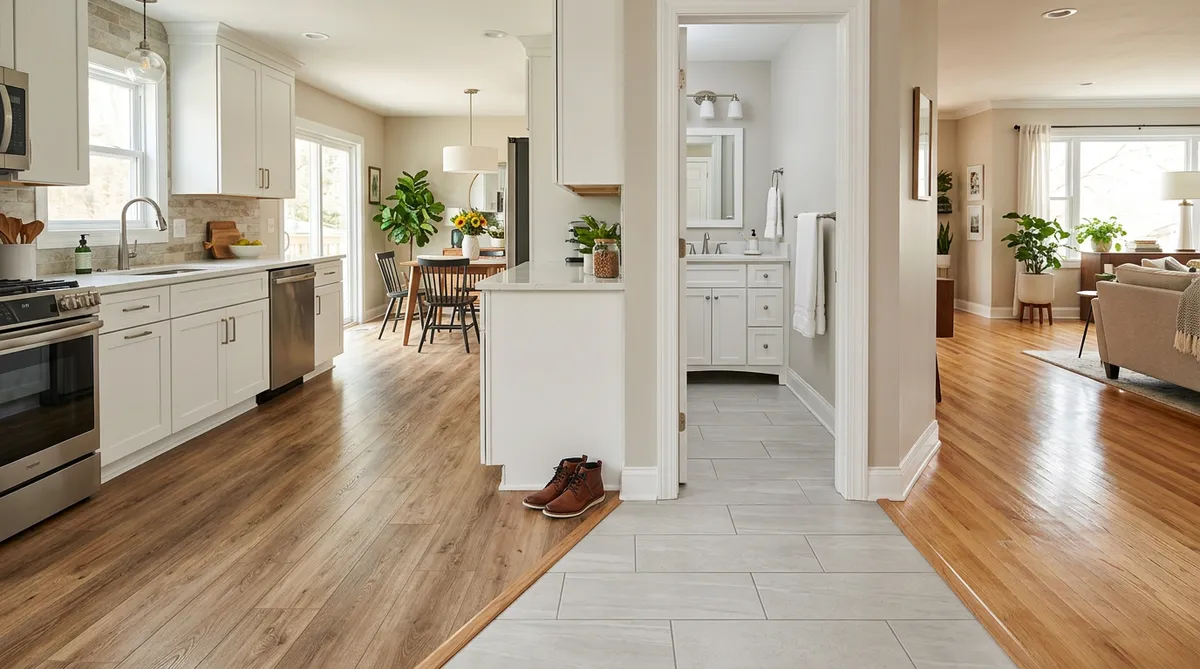
LVP, Tile, or Refinish? Choosing the Right Floor for Kitchens, Baths, and High-Traffic Rooms
When it comes to home improvement, selecting the right flooring is crucial—especially in spaces like kitchens, bathrooms, and other high-traffic rooms. These areas demand durability, style, and ease of maintenance. As seasoned contractors, we’re here to help you navigate your options: Luxury Vinyl Plank (LVP), tile, or refinishing existing floors.
Understanding Your Options
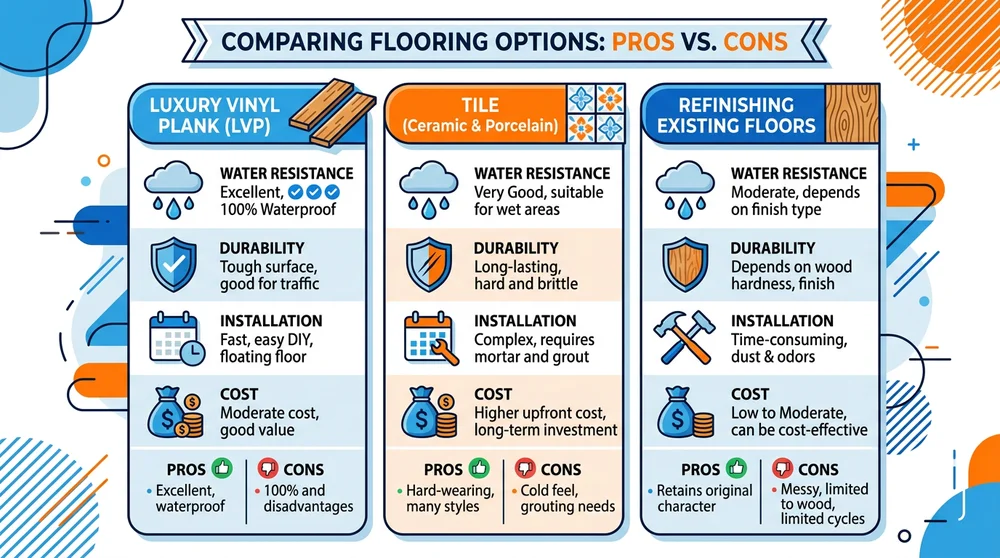
Before making a decision, it’s essential to understand the pros and cons of each flooring type. Let’s break down the most popular choices.
Luxury Vinyl Plank (LVP)
LVP has surged in popularity due to its affordability, versatility, and realistic appearance. It mimics hardwood but offers superior water resistance.
Pros:
- Water-resistant and waterproof, ideal for kitchens and bathrooms
- Easy to install, often with click-lock systems
- Soft underfoot and comfortable
- Wide variety of styles and colors
- Lower cost compared to natural stone or hardwood
Cons:
- Can dent or scratch with heavy impacts
- Not as long-lasting as tile in extremely high-traffic areas
- May fade or discolor over time if exposed to direct sunlight
Tile
Tile, especially ceramic or porcelain, remains a top choice for durability and style.
Pros:
- Extremely durable and resistant to water, stains, and scratches
- Easy to clean and maintain
- Wide range of designs, colors, and textures
- Excellent for bathrooms and kitchens
Cons:
- Hard surface can be uncomfortable to stand on for long periods
- Installation can be labor-intensive and costly
- Grout lines require periodic cleaning and sealing
- Cold underfoot unless paired with radiant heating
Refinish Existing Floors
Refinishing hardwood floors or other existing surfaces can breathe new life into your space.
Pros:
- Preserves the character and warmth of original hardwood
- Cost-effective compared to new flooring
- Can be completed relatively quickly
Cons:
- Not suitable for damaged or heavily worn floors
- Limited to certain materials
- May require multiple coats of stain or finish for desired look
Factors to Consider When Choosing Flooring
Every home is unique, and so are your needs. Here are key factors to keep in mind:
Durability and Traffic
High-traffic rooms like kitchens and hallways need flooring that can withstand daily wear and tear. Tile and LVP are excellent choices here, with tile offering superior durability.
Water Resistance
In kitchens and bathrooms, water resistance is non-negotiable. Tile is naturally waterproof, while LVP offers excellent water resistance. Refinishing hardwood may not be suitable for these areas unless you opt for water-resistant finishes.
Comfort and Sound
If comfort underfoot and noise reduction are priorities, LVP provides a softer surface and absorbs sound better than tile.
Style and Aesthetics
Your flooring sets the tone of your space. Tile offers endless design possibilities, from sleek modern to rustic. LVP mimics hardwood or stone, giving you style options with easier maintenance. Refinishing allows you to keep the original character of your hardwood floors.
Budget
Cost varies widely. LVP is generally the most budget-friendly, followed by refinishing existing floors, with tile often being the most expensive due to installation costs.
Installation Time and Disruption
Consider how much time you can dedicate to installation. LVP is quick and straightforward, often completed in a day. Tile can take several days, especially with grout curing times. Refinishing hardwood floors is relatively quick but may require moving furniture.
Practical Tips from the Pros
- Assess your current floors: If your existing hardwood is in good shape, refinishing might be the most cost-effective and stylish option.
- Think about future maintenance: Tile and LVP are low-maintenance, making them ideal for busy households.
- Plan for comfort: For rooms where you stand for long periods, like kitchens, consider cushioned underlayment with LVP or heated tile.
- Consult a professional: An experienced contractor can assess your space and recommend the best flooring based on your lifestyle, budget, and aesthetic goals.
Final Thoughts
Choosing the right flooring for kitchens, baths, and high-traffic rooms involves balancing durability, style, comfort, and budget. Whether you opt for the water-resistant versatility of LVP, the timeless durability of tile, or the charm of refinished hardwood, making an informed decision will ensure your floors stand the test of time.
Remember, the right flooring can transform your space, boost your home’s value, and make everyday living more enjoyable. When in doubt, consult with a licensed contractor who can guide you through the best options tailored to your home’s needs.