Installing a Home EV Charger: Level 1 vs. Level 2, Panel Capacity, and What an Electrician Really Charges
Understanding Your Home EV Charging Options
As electric vehicles (EVs) become more popular, more homeowners are considering installing a dedicated EV charger at home. But before you make a decision, it’s essential to understand the two main types of chargers—Level 1 and Level 2—and what each entails.
Level 1 vs. Level 2 Chargers: What's the Difference?
Level 1 Chargers
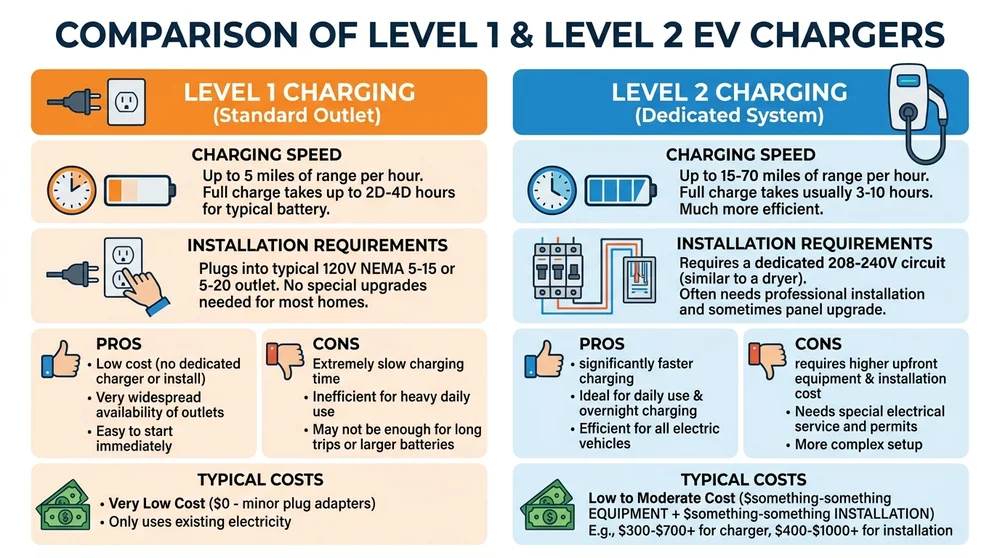
Level 1 chargers are the simplest and most basic option. They typically come with your EV and plug into a standard household outlet—usually a 120-volt outlet.
Pros:
- No additional installation costs
- Easy to set up—just plug and play
- Suitable for overnight charging if your daily driving is minimal
Cons:
- Slow charging speed—adding about 3-5 miles of range per hour
- Not ideal for frequent or long-distance use
Level 2 Chargers
Level 2 chargers operate at 240 volts, similar to what your dryer or oven uses. They require a dedicated circuit and professional installation.
Pros:
- Faster charging—adding 20-60 miles of range per hour
- Better suited for daily use and longer trips
- Can be installed in a garage or outside
Cons:
- Higher upfront costs for the charger and installation
- Requires electrical work and panel assessment
Assessing Your Panel Capacity
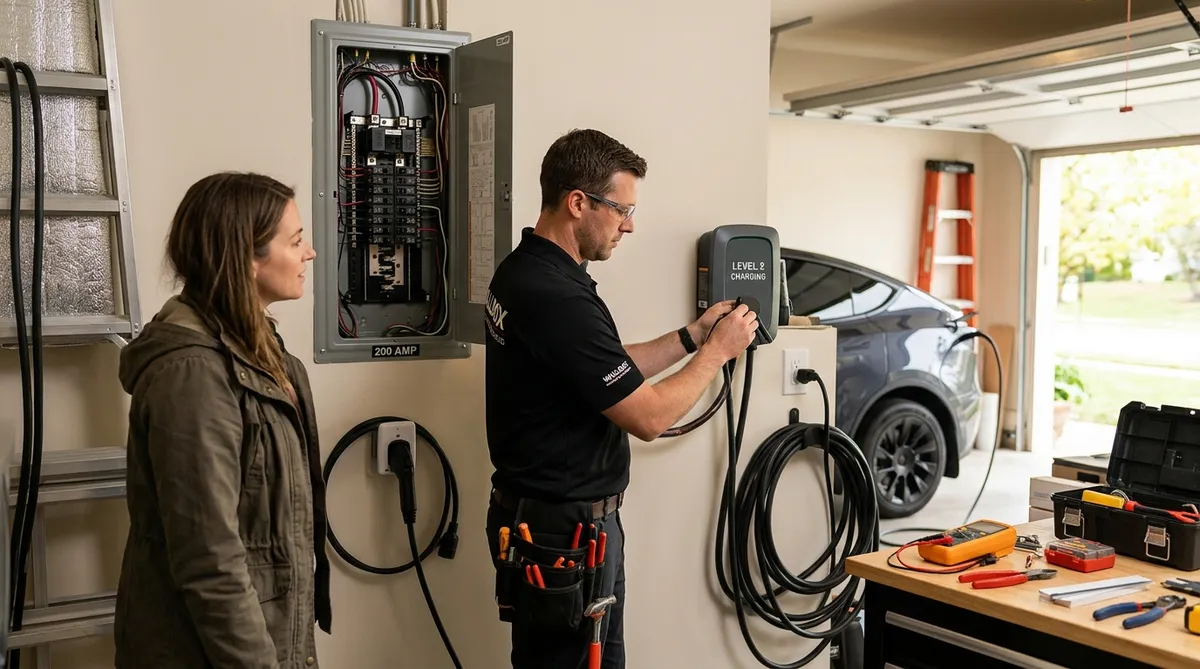
Before installing a Level 2 charger, you need to evaluate your home’s electrical panel capacity. Most homes have either a 100-amp or 200-amp panel.
How to Determine Your Panel Capacity
- Check your main breaker panel for the amperage rating (e.g., 100A, 200A).
- Consider your current electrical load—appliances, HVAC, lighting, etc.
- Consult with a licensed electrician to assess if your panel can handle the additional load.
Upgrading Your Panel
If your panel is near capacity, an upgrade might be necessary. This can add to the overall cost but ensures safe and reliable charging.
What Do Electricians Really Charge?
The cost of installing a home EV charger varies based on several factors:
- Charger Type: Level 1 is usually just a plug-in, so minimal costs. Level 2 requires a dedicated circuit and wiring.
- Electrical Panel: If your panel needs upgrading, this adds to the cost.
- Location: Garage, outside, or inside installation affects labor and materials.
- Permits and Inspection: Local regulations may require permits, which can add to the expense.
Typical Cost Breakdown
- Level 1 Installation: Usually minimal or no charge if simply plugging into an existing outlet.
- Level 2 Installation: Ranges from $1,000 to $3,000, including the charger, wiring, and labor.
- Panel Upgrade: Can cost between $1,000 and $3,000 depending on the extent of work needed.
What to Expect
On average, homeowners spend around $1,500 to $2,500 for a professional Level 2 charger installation, including any necessary panel upgrades. Always get multiple quotes from licensed electricians to ensure fair pricing.
Final Tips for a Smooth Installation
- Plan Ahead: Determine your daily driving needs to choose the right charger.
- Consult a Pro: Always hire a licensed electrician for safety and code compliance.
- Check Incentives: Some states and utilities offer rebates or incentives for installing EV chargers.
- Future-Proof: Consider installing a charger with smart features or higher amperage capacity for future EVs.
Installing an EV charger at home is a smart investment for any electric vehicle owner. By understanding the differences between Level 1 and Level 2 chargers, assessing your electrical panel's capacity, and knowing what electricians typically charge, you can make informed decisions that save you time and money while ensuring safe, reliable charging for years to come.
Conclusion
Choosing the right home EV charger involves evaluating your driving habits, electrical system, and budget. Whether you opt for the simplicity of Level 1 or the speed of Level 2, working with a licensed electrician ensures a safe, efficient installation that keeps your EV ready to go whenever you are. Happy charging!