Fence Materials Compared: Wood, Vinyl, and Aluminum — Lifespan, Maintenance, and Property-Line Pitfalls
A fence isn’t just about privacy or curb appeal — it’s a long-term investment that can impact your property’s value and your daily life. With so many options available, choosing the right material can feel overwhelming. Here, we’ll break down the pros and cons of three popular fence materials — wood, vinyl, and aluminum — focusing on lifespan, maintenance, and common property-line pitfalls.
Understanding Your Fence Options
Before diving into specifics, it’s helpful to understand what each material offers:
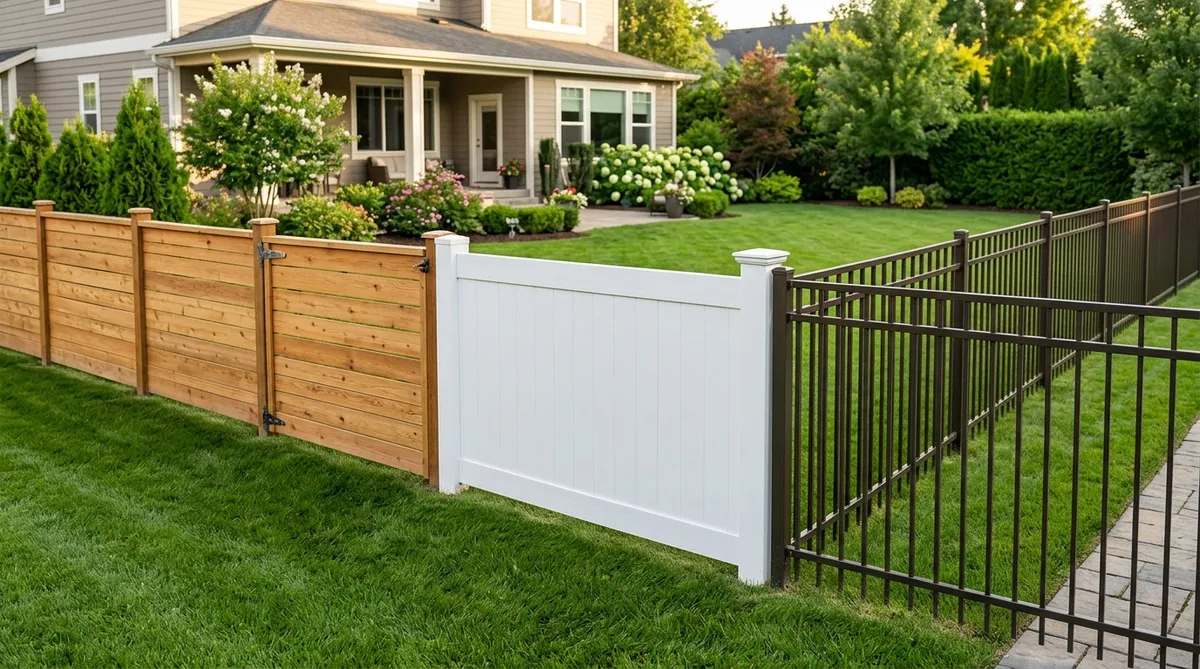
- Wood: The classic choice, known for its natural beauty and versatility.
- Vinyl: A low-maintenance, durable synthetic option that mimics the look of wood.
- Aluminum: Lightweight, rust-resistant, and often used for ornamental or decorative fencing.
Now, let’s explore each in detail.
Lifespan: How Long Will Your Fence Last?
Wood Fences
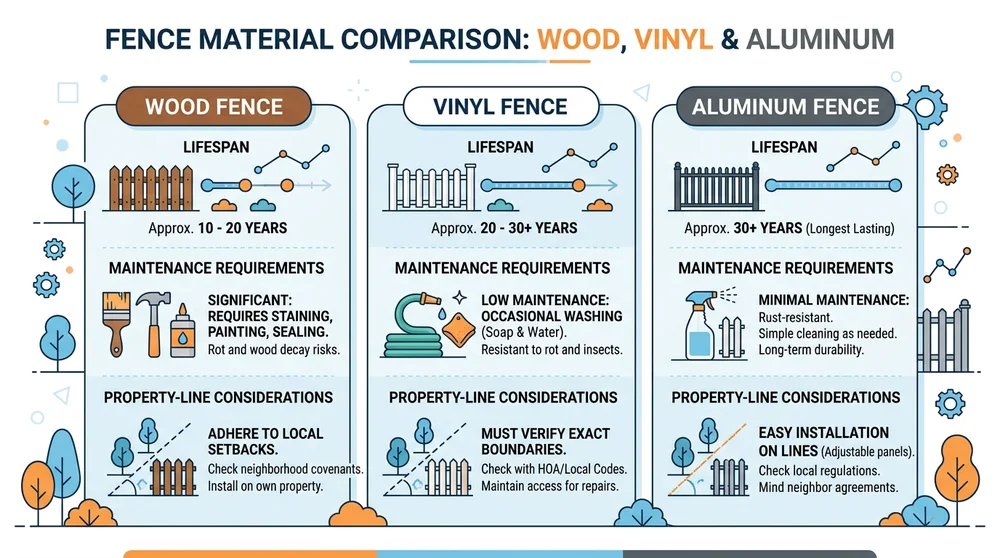
Wood fences typically last between 5 to 20 years, depending on the type of wood and climate conditions. Cedar and redwood are more resistant to rot and insects, extending their lifespan. However, untreated or softer woods like pine may need replacement sooner.
Vinyl Fences
Vinyl fences are known for their impressive durability, often lasting 20 to 30 years or more. They resist rot, pests, and weathering, making them a long-term investment.
Aluminum Fences
Aluminum fences generally last 20 to 50 years with minimal maintenance. They resist rust and corrosion, especially in coastal or humid environments.
Maintenance: What’s Required to Keep Your Fence Looking Great?
Wood
Wood fences require regular upkeep to prevent rot, warping, and insect damage. This includes:
- Applying sealants or stain every 2-3 years
- Regular cleaning to remove dirt and mildew
- Repairs for broken or rotting boards
Vinyl
Vinyl fences are the low-maintenance champion. They only need occasional cleaning with soap and water to maintain their appearance. Unlike wood, they don’t require staining or sealing.
Aluminum
Aluminum fences are also low-maintenance. Occasional rinsing with water keeps them free of dirt and debris. If painted, touch-ups may be needed over time, but generally, they require minimal upkeep.
Property-Line Pitfalls: Avoiding Fence Disputes
Navigating property lines is a common source of fence disputes. Here are some tips to avoid pitfalls:
- Check property boundaries: Always verify your property lines before installing a fence. Your local assessor’s office or a professional surveyor can help.
- Understand local regulations: Some municipalities have setback requirements or restrictions on fence height and style.
- Get neighbor approval: Communicate your plans with neighbors early to prevent misunderstandings.
- Use clear markers: Incorporate boundary markers or survey stakes during installation.
- Document everything: Keep copies of permits, surveys, and correspondence.
Specific Material Considerations
- Wood: Easier to customize, but can be built over property lines if not careful. Regularly check for encroachments.
- Vinyl: Usually comes pre-assembled, making it easier to install within property boundaries.
- Aluminum: Often used for decorative fences that define property lines; ensure proper measurements to avoid disputes.
Making the Right Choice for Your Home
Choosing the best fence material depends on your priorities:
- If you love a natural look and are willing to do regular maintenance, wood might be your best bet.
- For durability and minimal upkeep, vinyl offers excellent longevity.
- For decorative appeal and resistance to the elements, aluminum provides a stylish and long-lasting option.
Remember, proper planning, clear communication with neighbors, and adherence to local regulations are key to a smooth fencing project.
Final Thoughts
Fences are more than just boundaries — they’re an extension of your home’s style and security. By understanding the lifespan, maintenance needs, and potential property-line issues associated with wood, vinyl, and aluminum fences, you can make an informed decision that suits your lifestyle and property. Consulting with a professional contractor can also help ensure your fence is installed correctly and legally, giving you peace of mind for years to come.
Happy fencing!