Concrete Patio vs. Pavers vs. Stamped Concrete: Which Is the Best Choice for Your Outdoor Space?
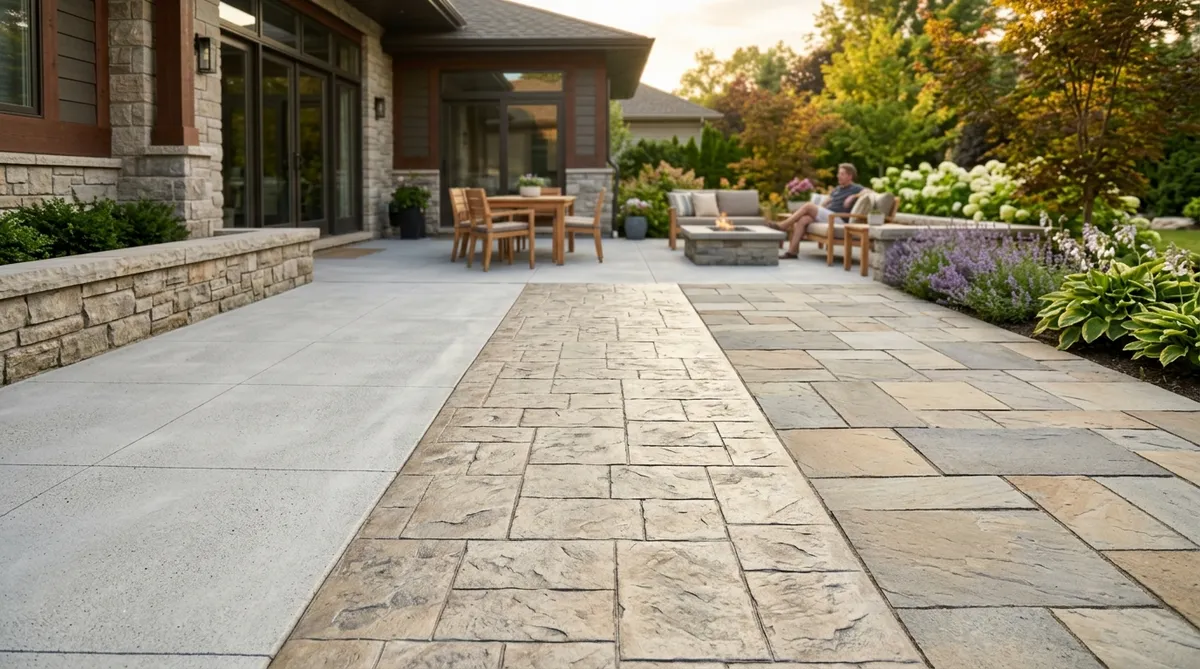
When it comes to creating a beautiful and durable outdoor living area, choosing the right material is crucial. Homeowners often find themselves weighing options like traditional concrete patios, paver stones, and stamped concrete. Each has its own set of advantages and drawbacks, especially when it comes to cost, longevity, and how they handle wear and tear over time.
In this guide, we’ll break down the key differences to help you make an informed decision that fits your budget, style, and long-term needs.
Cost Comparison: What’s the Price Tag?
Understanding the costs involved is the first step in choosing the right material for your patio.
Concrete Patio
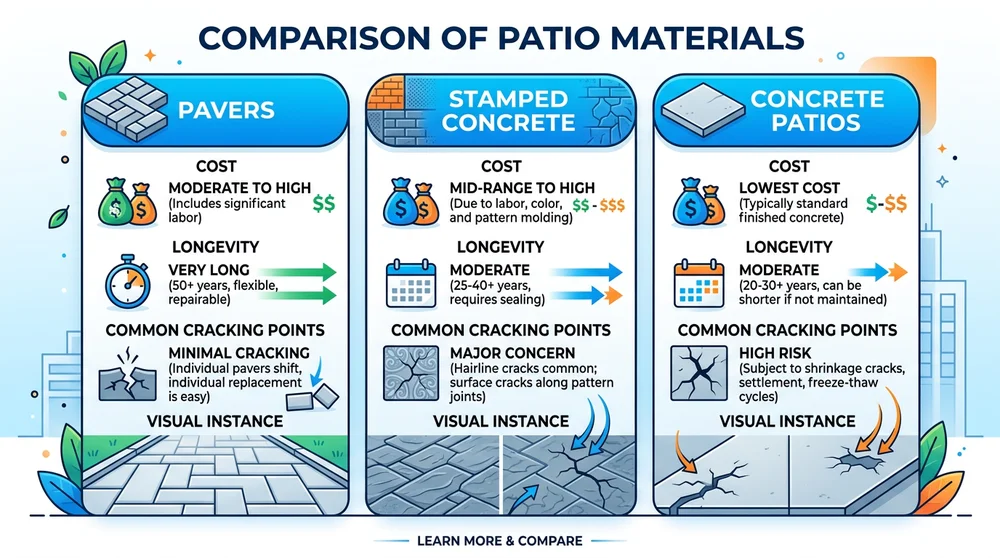
A standard poured concrete patio is usually the most budget-friendly option upfront. The average cost ranges from $6 to $10 per square foot. This includes basic installation, but additional costs can arise if you want a colored or textured finish.
Pavers
Paver patios tend to be more expensive initially, typically costing between $10 and $20 per square foot. The price varies depending on the material (concrete, brick, or natural stone), size, and pattern complexity. While the upfront cost is higher, pavers are often considered a good investment because they are easy to repair and replace.
Stamped Concrete
Stamped concrete falls somewhere in the middle, with costs usually ranging from $8 to $15 per square foot. The process involves pouring concrete and then stamping it with patterns and textures to mimic stone, brick, or other materials. The added design features can increase the price but offer a high-end look.
Longevity and Durability: How Long Do They Last?
Durability is a key factor for outdoor surfaces, especially in areas with harsh weather or heavy foot traffic.
Concrete Patio
A well-maintained concrete patio can last 20 to 30 years. However, plain concrete is prone to cracking over time due to ground movement, temperature fluctuations, or improper installation. Sealing can extend its lifespan and reduce surface cracks.
Pavers
Pavers are arguably the most durable option, often lasting 25 to 50 years or more. Their interlocking design allows for slight shifts without cracking the entire surface, making them ideal for areas with shifting soil or freeze-thaw cycles.
Stamped Concrete
Stamped concrete typically lasts 15 to 25 years. While it can be quite durable, the stamped pattern can wear down or chip over time, especially in high-traffic areas or if not properly sealed and maintained.
What Cracks First? Common Weak Points
Understanding where each material might crack or fail helps in planning maintenance and repairs.
Concrete Patio
Cracks are the most common issue with plain concrete. They often appear within the first few years due to shrinkage, temperature changes, or ground movement. Proper installation, reinforcement, and sealing can minimize cracking.
Pavers
Pavers are less likely to crack because of their flexibility. Instead, individual pavers may shift or settle over time, leading to uneven surfaces. These can usually be fixed by re-leveling or replacing a few stones.
Stamped Concrete
Stamped concrete is prone to surface cracking, especially if not properly cured or sealed. The textured surface can also chip or peel, particularly in areas with freeze-thaw cycles or heavy use.
Maintenance Tips for Longevity
- Concrete: Seal every 2-3 years to prevent surface damage and cracks.
- Pavers: Regularly sweep and occasionally re-sand joints to keep the surface stable.
- Stamped Concrete: Keep it sealed and avoid using harsh de-icing chemicals that can damage the surface.
Final Thoughts
Choosing between a concrete patio, pavers, or stamped concrete depends on your budget, aesthetic preferences, and how much maintenance you’re willing to do. Pavers tend to offer the best longevity and ease of repair, but come at a higher initial cost. Concrete is the most economical and straightforward but may require more repairs over time. Stamped concrete provides a stylish look with moderate durability and cost.
Consulting with a professional contractor can help you assess your specific site conditions and select the best material for your outdoor oasis. Remember, proper installation and regular maintenance are key to maximizing the lifespan of whichever option you choose.
Happy patio planning!